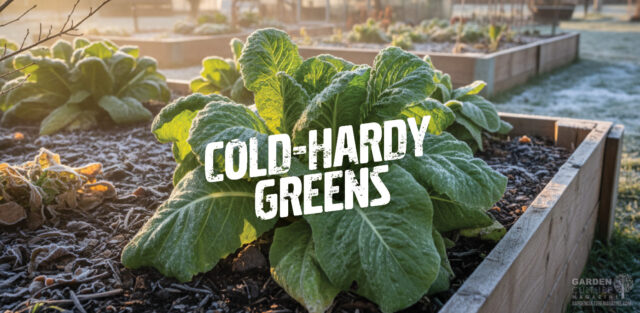
Cold-hardy greens thrive in the cold, are easy to plant, and add flavor to a winter salad
The secret to year-round food production is choosing the right crops! Yes, you can absolutely grow nutritious salad greens in the dead of winter. We can help you get it done with some suggestions for cold-hardy greens and the various tools you’ll need to help them grow into something delicious on your dinner plate.

How to Plant Cold-Hardy Greens
The first step to growing cold-hardy, resilient veggies is to find a sheltered sunny spot with good drainage. This is crucial, as young seedlings may freeze if water pools around them. Next, prepare the soil the same way you would for summer gardening by adding compost and leaf mulch. Then, sow your chosen seeds directly into the soil in early fall. Many garden centers will also stock cold-hardy greens as small plant starts if you’d rather not start from seed.
However you start, the key to success is to keep the soil around the plants moist so the roots won’t freeze. There are several methods to achieve this: plant the seedlings or plant starts in a cold frame, apply a thick layer of mulch, or grow the veggies under a large cloche dome or hoop house. Just remember to lift the covers on sunny days to allow for airflow and prevent the plants from overheating. By January or February, the plants should be large enough to harvest. Cut your greens the same as you would in the summer and toss them into a bowl for a delicious salad!
The great thing about growing winter greens is that it provides the opportunity to keep the garden growing all year round. The classic fan-favourites, such as kale, chard, and bok choy, are great options for winter growing, but why not take the opportunity the cold offers to try different varieties of salad greens that they might not otherwise grow in the heat of summer? Check out my suggestions below!
Five Greens to Grow in the Winter Garden
Arugula
Quick-growing and frost-tolerant, arugula is hardy to 28°F (-2 °C) without protection. The seeds will germinate in temperatures as low as 40°F (5°C). When temperatures drop significantly, protect the plants from hard freezes or use a cold frame.
Lamb’s Lettuce
Lamb’s lettuce, also known as mache or corn salad, produces rosettes of small, rounded leaves with a mild, nutty flavor. It grows exceptionally well in cold weather and can even survive under snow. It is a slow-growing plant, so to produce a large crop, plant a large number of seeds. You can speed up the process by putting it under a cloche or hoop cover to trap the heat.

Mizuna
A member of the mustard family, sometimes referred to as Japanese mustard, this fast-maturing cold-hardy leafy green is tolerant of low light, making it ideal for the gloomy, sunless days of winter. Seeds germinate in soil as cold as 40°F (5°C) and survive subzero temperatures. The mild-flavored feathery green leaves have a pleasant crunch that’s perfect for use in salads.
Tatsoi
This low-growing green is also a member of the mustard family and, like its cousin, mizuna laughs off winter, thriving in the shelter of a simple cold frame. Use the young leaves in salads or let the plants mature and add them to stir-fries or Asian-style soups.

Fun jen (pronounced foon yen)
With a mild flavor and crisp texture, the wintergreen grows quickly, offering baby greens ready to harvest just a month after sowing. In the cold winter nights, remember to protect the tender shoots under a hoop house or in a cold frame.


How to Grow a Fall Salad Garden
Did somebody say fall greens? It’s time to think about getting a fall salad garden going, with some of the best varieties ready for harvest in just 30 days!

Winning Weeds You Want in Your Garden for a Biodiversity Boost
When we find weeds growing in the garden, our tendency may be to pick them, but hold the phone! Many winning weeds help boost biodiversity and yields.

Cultivating Intention and Slowing Things Down in the Fall Garden
As we say goodbye to summer and prepare for winter, it’s important to take a beat and look to the fall garden for inspiration and ways to live more sustainably.