My vegetable garden is a little wild; there’s nothing tidy about it, to be honest. I have mixed plantings of flowers, herbs, fruit, and vegetables, and they all seem to coexist just fine. I have volunteer plants that pop up every year, and I leave them where they are because I believe that’s where they were meant to be. Of course, I have weeds that grow in the garden bed, too, and although I pull some of them, others I keep because they help boost biodiversity, among other things.
It sounds chaotic, but weeds play an essential role in the climate-wise growing space. Many of them attract beneficial insects to the garden that help with pollination and natural pest control. The more weeding you do, the more prone your garden will be to pest problems. A few weeds here and there can also act as ground cover and prevent soil erosion year-round.
Here are some of the ‘weeds’ I allow to grow in my yard to help boost biodiversity:
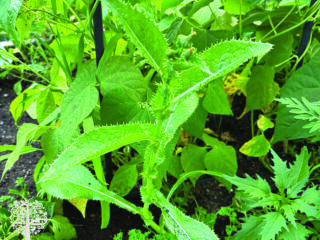
You might be tempted to rip these fast-spreading and thorny weeds out of your garden, but don’t be too hasty! At the very least, leave some of them throughout the beds. Native thistles, like Pasture thistle and Field thistle, form beautiful purple flowers on tall stalks that attract butterfly and moth larvae. Swallowtails, bees, monarch butterflies, and skippers will also come in droves. In the colder months, birds will forage for thistle seeds.
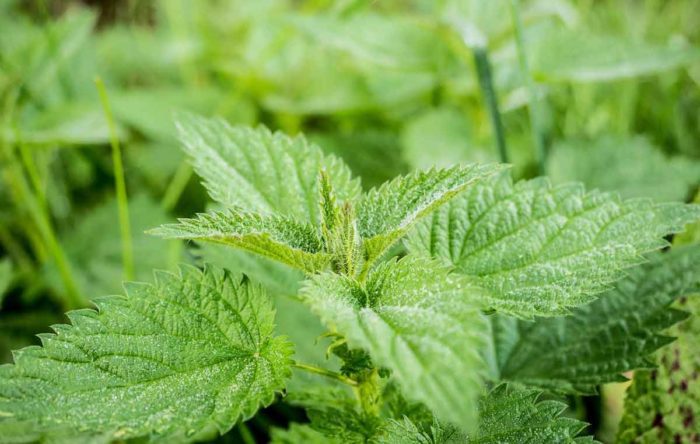
Many of us curse this weed because even the slightest interaction can lead to some major skin irritations. Despite its nasty reputation, stinging nettle is highly medicinal and perfect for the home apothecary. Allowing it to grow in the garden will also attract predatory bugs like lacewings and ladybugs, who will feast on aphids, mealybugs, and leafhoppers.
I don’t care what anyone says (looking at you, husband), mullein deserves a spot in every garden. This biennial weed with fuzzy leaves and tall, yellow, corn-like stalks grows freely around my driveway, and I knew I kept it around for some reason. This weed is used in traditional herbal medicine to help alleviate respiratory issues, but it also attracts bees like nobody’s business thanks to its generous amounts of pollen and nectar. Mullein has deep tap roots and will also help prevent soil erosion.
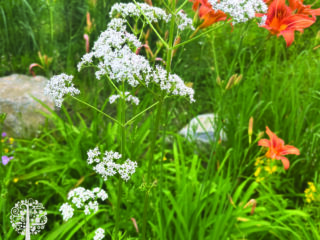
I have Queen Anne’s Lace pop up in my yard in different spots every year. Part of the carrot family, this weed is adored by bees, wasps, and flies. Ladybugs and parasitic wasps also love it. Queen Anne’s Lace is considered invasive in many areas, so keep an eye on it to make sure it doesn’t outcompete the native species you have growing in your garden. It’s important to note that this weed looks a lot like poison hemlock, so make sure you know the difference before touching it.
Modern-day gardeners have been trained to hate dandelions, but these gems should be left right where they are. Dandelions are among some of the first springtime foods for our essential pollinators. They’re also entirely edible for humans, so I like to keep them around just in case the poop hits the fan.

Tall spikes of blue, pink, or purple flowers make this weed attractive to me and bees and butterflies! Viper’s bugloss, also known as Spiked Speedwell, Blueweed, or Dropwort, is a short-lived biennial offering tons of pollen and nectar to many bee varieties. I have this plant growing freely around the driveway, and it’s usually covered with bees. Birds and rodents like the seeds, and many small animals take refuge in the leaves. Its long taproots help prevent soil erosion, too.
Goldenrod has a bad rap for being a weed, but it’s actually a wildflower native to North America that attracts bees and butterflies. This plant isn’t fast-spreading, so it can be easily controlled in the garden. It blooms at the same time as ragweed, so make sure you know the difference between the two.
I can’t stand that milkweed is often considered a weed. To the sustainable, eco-friendly gardener, milkweed is highly desirable. I had a massive patch of milkweed growing at our former house. The kids and I loved finding the monarch caterpillars on it each summer. When we moved, I tried to transplant some of it to our new property, and it never took; milkweed doesn’t like to be moved. I’ve been spreading seeds every fall, and finally, I have some popping up right next to my vegetable garden. I don’t think I ever spread the seed there, but I don’t care. I’m over the moon about the milkweed and hope it takes all the space it needs to support the struggling monarchs.

They are a nuisance in the garden, but many common weeds sure are good for the body! Some weeds are packed with nutrition and have many medicinal properties.

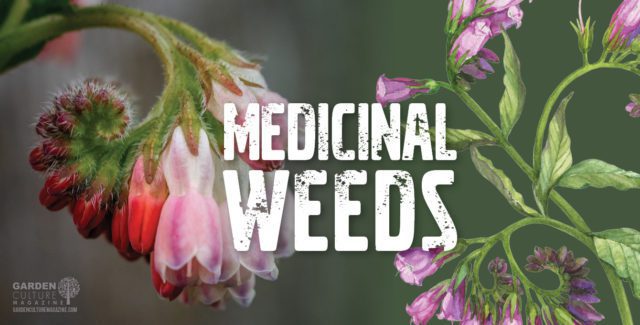
You might think it’s just a humble-looking weed, but finding comfrey in the garden is a bonus! Caroline Rivard explains why medicinal growers love it.
While some call it a pesky garden weed, burdock has many medicinal properties. It supports vital organs, including the skin, and boosts the metabolism!

It hurts when you touch it, but stinging nettle is great for the body. Don’t banish the weed from the garden; take advantage of its many health benefits!