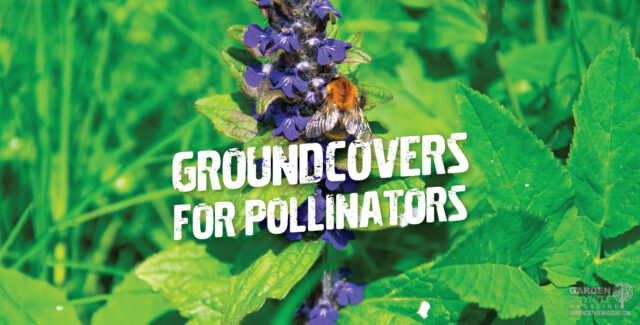
I have fallen in love with groundcovers, not just because of the aesthetic they bring to the landscape. Climbing hydrangea spread out in a frothy white pattern around a favorite tree is whimsical; honeysuckle meandering through a perennial bed instead of respectfully climbing a trellis is just as lovely. But I am mostly enthralled because groundcovers are a little-known pollinator food source.
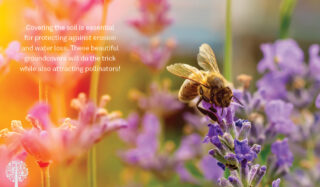
However, it sounds daunting to plant groundcovers. Which are the best for pollinators? What if the plant takes over the garden (some can be aggressive growers)? Worse, what if I don’t like them after all?
Gary Lewis of Phoenix Perennials in Richmond, BC, is a groundcover expert. His book The Complete Book of Groundcovers offers insight into over 4,000 groundcovers. When I spoke with him earlier this year about groundcovers for the latest edition of Garden Culture magazine, he gave me some great advice. Start slowly, plant a few patches, watch them grow, and then gradually build a garden full of groundcovers.
Most groundcovers are perennials and will return faithfully year after year. Start slow and plant these pollinator favorites:
This plant grows up to 1 foot and does best in full sun to part shade. It blooms from spring to summer and is available in pink, lavender-blue, violet, and white.
Foamflower enjoys partial sun to full shade, with foliage reaching a height of about 10 inches and the flowers 24 inches. The bottlebrush-like flowers bloom in the spring and attract pollinators such as ground bees, wasps and honeybees.
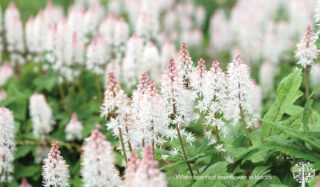
This low-growing beauty produces a beautiful, bee-friendly carpet that suppresses most weeds while giving entry space for ground-nesting pollinators. It blooms mid-to-late May and spreads but can be contained by dividing or thinning every year or two.
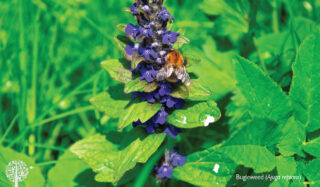
This is a common groundcover for part-to-deep shade, especially under trees. The native pachysandra, also called Allegheny spurge, is taller, slower-spreading and an interesting alternative that blooms in very early spring when many pollinators have just broken hibernation and need nectar and pollen.
Many herbs can also double as flowering groundcovers. Just as they flavor our meals, they offer pollinators something good to eat.
Creeping thyme is semi-evergreen, and when in bloom, its cloud of reddish lavender flowers gives an effect similar to that of the phloxes from a distance. Thyme is a favorite for moths and butterflies.
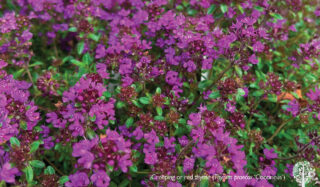
Although mints are not as easy to control or contain as other groundcovers, they are a favorite source of nectar and pollen for many bees.
Many ground-hugging shrubs are also nectar-rich buffets for pollinators.
The tiny white spring flowers of cotoneaster feed bees and the resulting red berries are adored by birds through the winter.
Winter-blooming heaters are tough and drought-tolerant once established. In milder climates, honeybees gather nectar from the plant, even in the middle of winter.
Creeping evergreens provide excellent erosion control on slopes and allow access to underground nesting pollinators. Honeybees will harvest resins to use as caulk and boost their immune systems.

We know that growing plants is good for the environment; why not step up your game with a low-carbon garden? Get started with these tips and tricks!
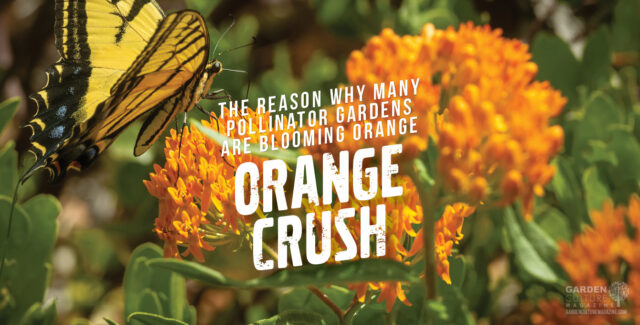
Trends come and go, but pollinator gardens are here to stay! You might notice a lot of orange popping up in gardens near you; we’ll tell you why.
It’s no secret they need our help; creating a welcome space for the bees in the garden is essential to their survival. We can help you get started!