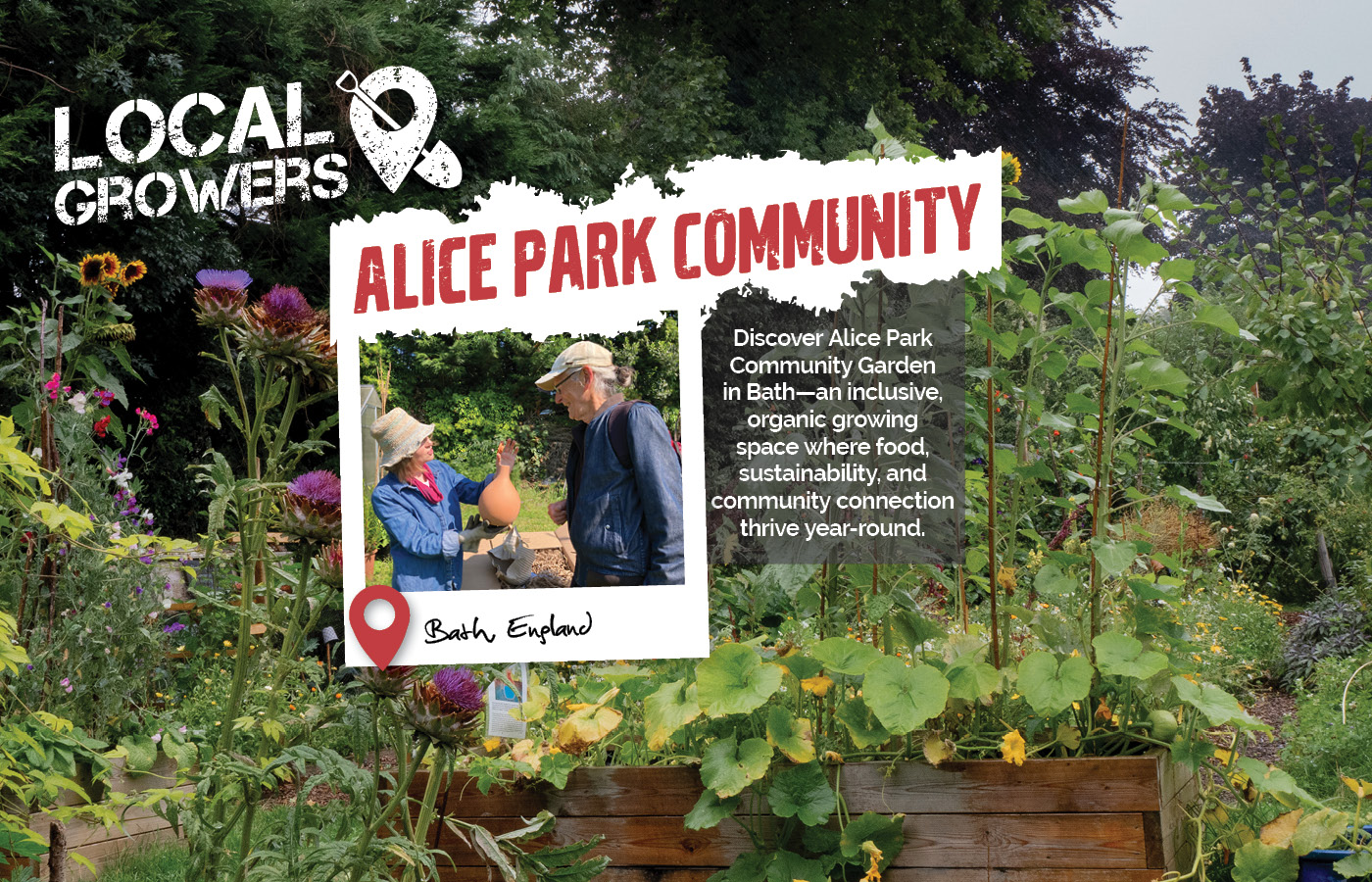
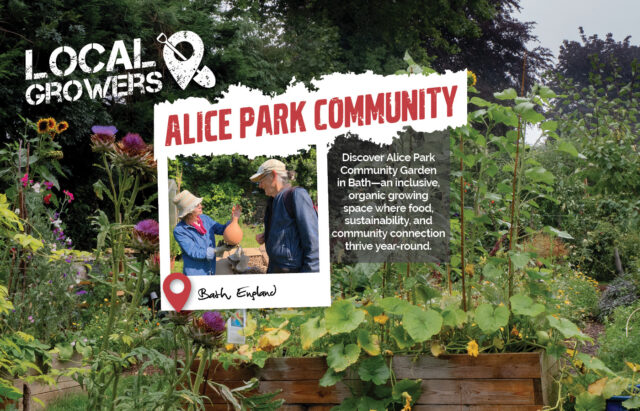
Tucked into a corner of Alice Park on Gloucester Road in Bath lies a small revolution. Alice Park Community Garden began as an idea sparked by Transition Larkhall in 2014, a response to both the global climate crisis and the local community’s needs. What started as empty ground has grown into something far more significant: a 24/7 accessible space where neighbours become gardeners, strangers become friends, and the simple act of growing food becomes a pathway to resilience.
“We aim to showcase good practice so that people can take away ideas for their own growing spaces,” explains Garden Manager Kathy Cook. “The garden constantly evolves and adapts to meet local needs.” This adaptability runs deeper than seasonal plantings; it reflects a community learning to respond to changing times together.
Volunteers tend polycultures where companion plants support each other naturally. The chemical-free approach relies on natural pest control and on building healthy soil to create a biodiverse environment. Children from the nearby nursery press their faces against the fence, watching tadpoles in the wildlife pond. The greenhouse hums with quiet conversations about seed varieties and soil health.
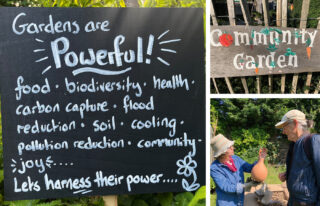
This is regenerative, vegan, no-dig organic growing in practice, but it’s the human elements that make it extraordinary. Weekly drop-in sessions welcome new volunteers who arrive tentatively and leave with muddy fingernails and plans to return. The workshops reflect the garden’s commitment to accessibility – all free, covering everything from low-input gardening and soil health to making natural plant remedies and zero-mile recipes harvested from the beds. When families with young children wanted forest school experiences, the garden partnered with Holly Dabbs from Foxglove Forest School to offer sessions for children aged one to eight.
Kathy’s approach recognises the reality many growers face: the need to future-proof the garden. This translates into a practical focus on building healthy soil, conserving water, maximising plant diversity, and selecting resilient seed varieties.
The garden’s year flows with community rhythms, festive wreath-making as winter approaches, seed swaps when spring stirs, plant sales supporting ongoing projects, and open days during the annual Larkhall Festival. These events transform the space from a quiet growing haven to a vibrant community hub, demonstrating that food security and social connection grow from the same soil.
From topping for bigger yields to growing with TLC, explore 5 expert-backed ways pros get the most from their gardens and grow rooms.
Learn how irrigation, root growth, humidity, and VPD shape plant physiology, helping balance vegetative growth with stress to boost valuable compounds.

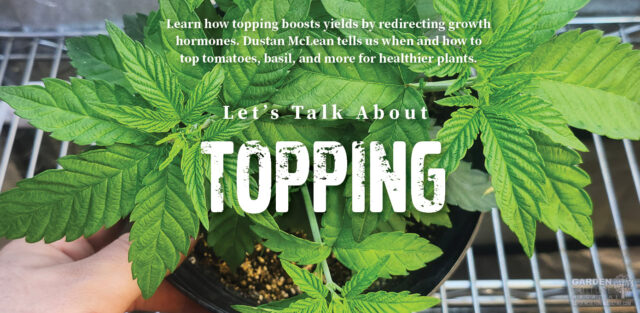
Dustan McLean writes about the topping technique gardeners use to control growth, improve airflow, and increase yields in crops like tomatoes, basil, and more.
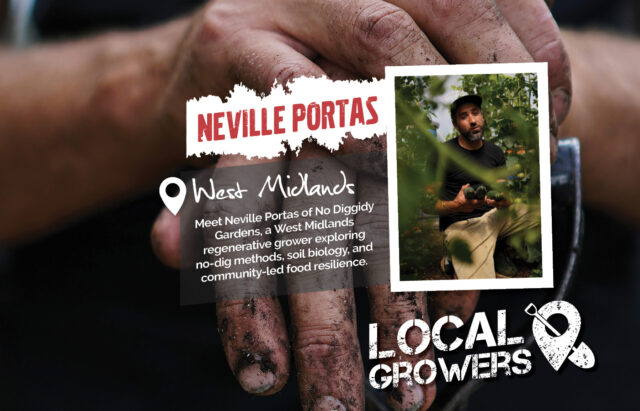
Meet Neville Portas of No Diggidy Gardens, a West Midlands regenerative grower exploring no-dig methods, soil biology, and community-led food resilience.
Discover Alice Park Community Garden in Bath—an inclusive, organic growing space where food, sustainability, and community connection thrive year-round.
Join Joseph Skibbie's #100kin10yrs movement, which aims to fight food insecurity and boost mental/physical health by connecting 100,000 people to homegrown food.
Explore Canada's evolving cannabis industry with Dr. Av Singh, founder of the Scotian Cannabis Alliance. Discover the value of community farming, challenges facing small-scale growers, and the role of sustainable stewardship.