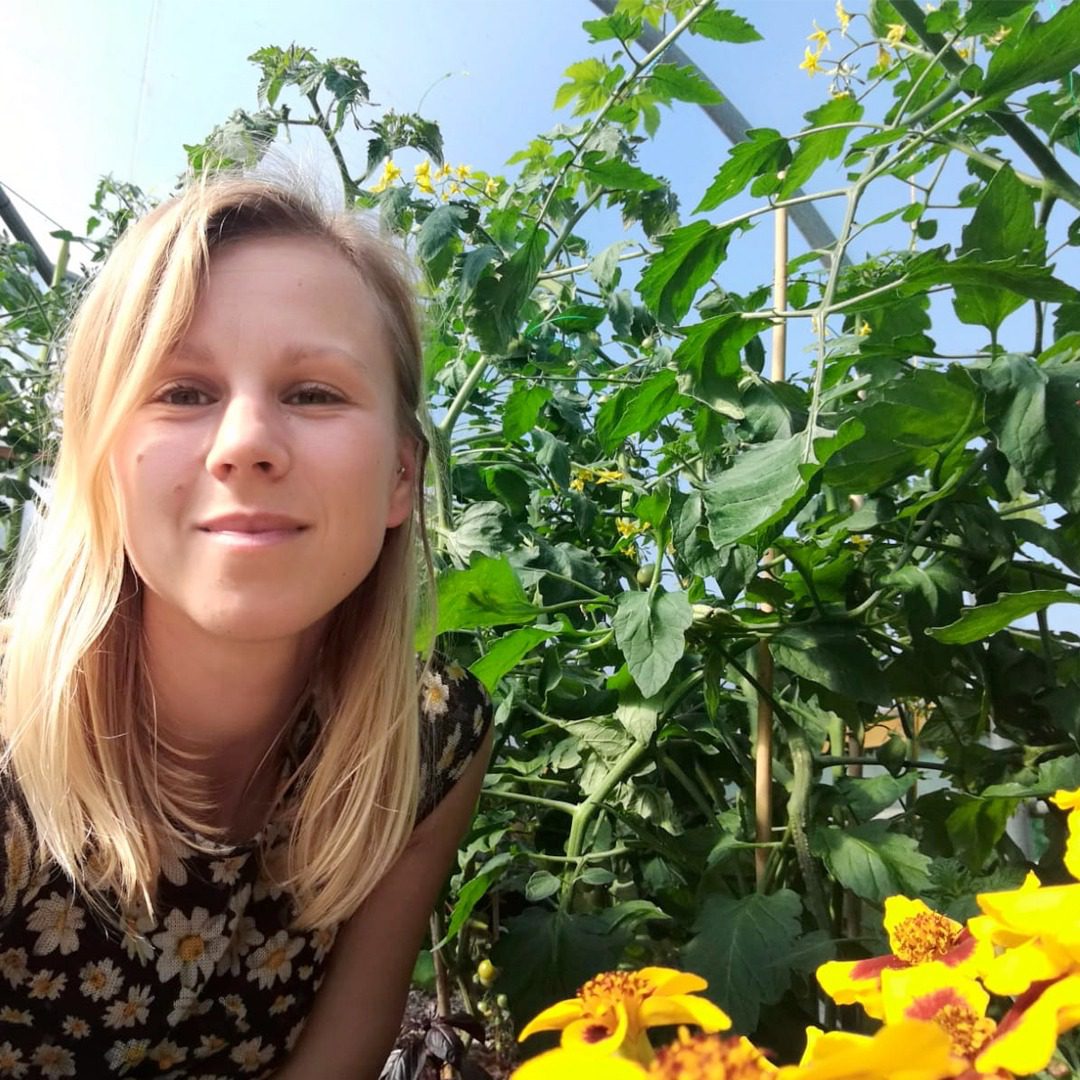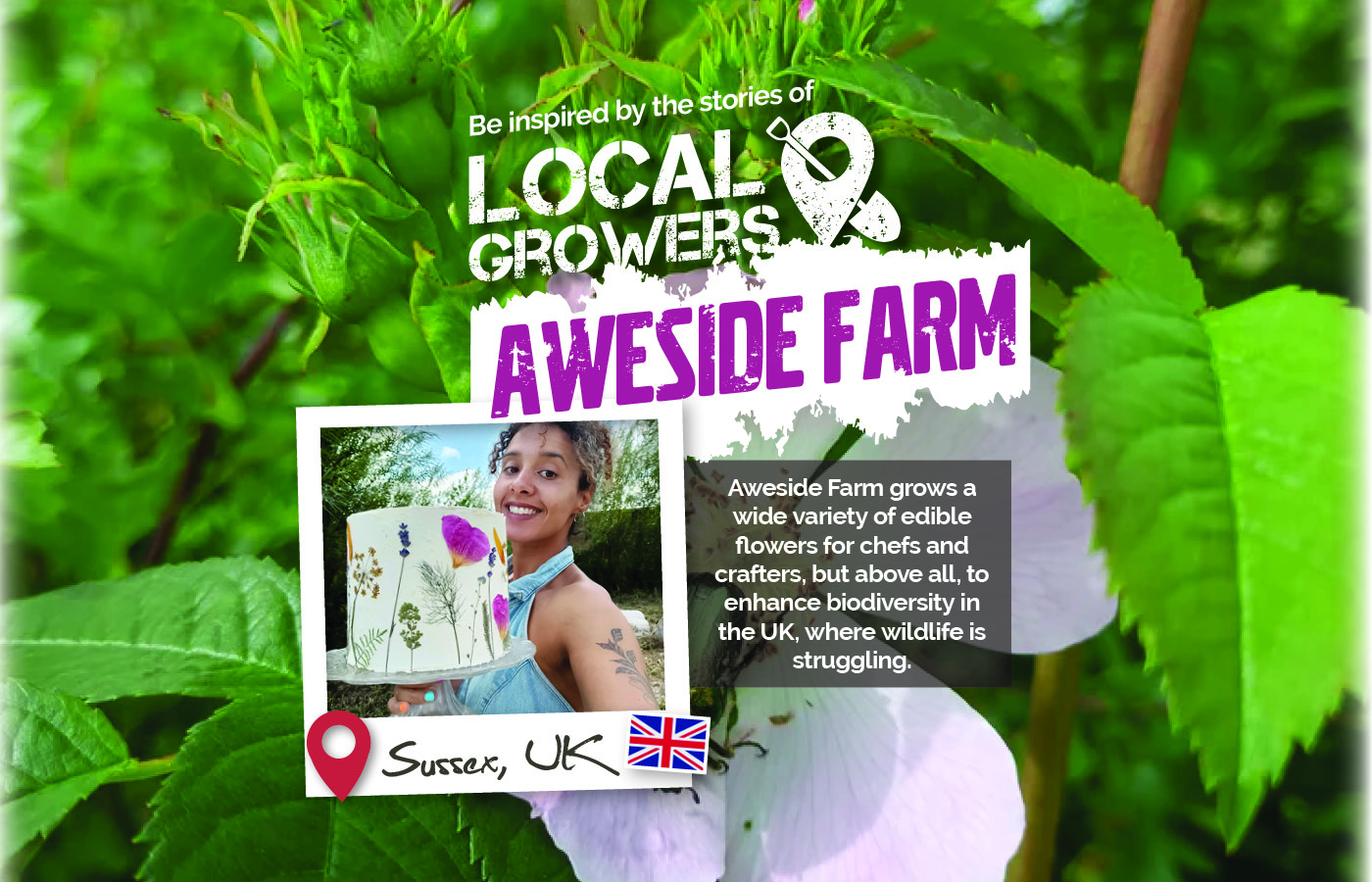
Meet Sinéad, the head grower at Aweside Farm, where seasonal, hand-picked flowers are carefully selected for chefs and crafters, and help enhance biodiversity. Her journey began in 2020, marking this as her sixth growing season. Originally an ex-arable field of grass and weeds, the land has been transformed through dedicated work. The team planted 5,500 trees across four acres, established new hedgerows, and created a thriving ecosystem. Many of the trees now stand ten feet tall, providing essential shelter from wind and habitat for pollinators. An acre and a half of woodland at the back features hazelnuts and leads out into a space full of walnuts.
The annual growing area is divided into smaller parcels, with one section designated for annual production through regular plant rotation. The perennial space features year-round herbs, including angelica, mints, and fennel, alongside gladioli and oxalis. There’s also an area for self-seeders, allowing plants to establish much stronger genetics than imported varieties.
Sinéad’s approach began with vegetables, but her interests quickly evolved toward something more meaningful. She discovered that flowers offered not just beauty and culinary possibilities, but something far more important—a lifeline for struggling wildlife. Recognizing that biodiversity is facing a steep decline, particularly in the UK, where numbers are among the worst in Europe, she realized the critical issue wasn’t just habitat loss, but also the absence of adequate food sources for wildlife.

Now focusing on 80% flower production, Sinéad creates dense plantings that serve a dual purpose. She grows far more than needed for harvest, following a simple but powerful principle: take only 50% for market, leaving the remaining 50% for wildlife.
However, building a business around fresh flowers presents significant challenges. A year’s worth of income must be generated in six months, and fresh flowers are demanding, requiring constant attention during peak season when there’s no time for marketing or business development. The solution has been a thoughtful redirection toward dried and preserved products. Sinéad builds stock that can be held throughout the year, spreading sales more evenly and reducing the intense pressure of immediate selling. The winter months become opportunities for marketing and business development, rather than periods of financial stress.
More importantly, this approach offers customers a sustainable alternative. While fresh flowers in winter typically come from South Africa, Israel, and Turkey, dried products offer local, environmentally conscious options with improved packaging solutions.
Sinéad’s vision extends beyond simply growing flowers. Her farm demonstrates that supporting wildlife and building sustainable businesses aren’t competing goals – they’re complementary aspects of creating something genuinely meaningful for both people and the planet.