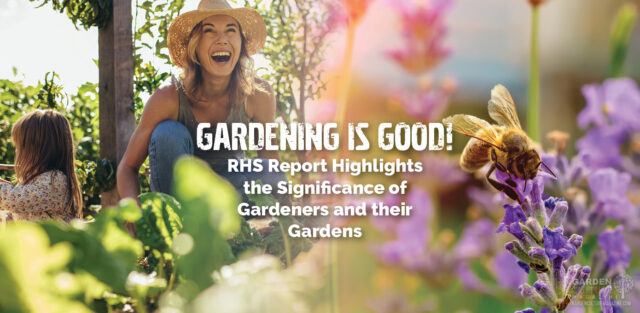
As a gardener, I’d like to believe that my garden is a small solution to the climate crisis and that it increases biodiversity. I bristle when I am labeled a hobbyist who putters around preening the pretty flowers. I am an environmentalist doing important on-the-ground conservation work. Now, a first-of-its-kind report by the Royal Horticultural Society (RHS), the UK’s leading garden charity, confirms just how important gardens and the work of gardeners are to the well-being of the planet. Vindication, at last!
Analysts, researchers, and horticultural experts reviewed existing literature and datasets to compile a report on why and how gardening matters in the 21st century. Although the information relates to the U.K., the RHS State of Gardening Report 2025 and its contents can be applied to gardens everywhere. As the curators of these spaces, we are doing more than we ever imagined possible for the well-being of the planet.
The RHS report estimates that the carbon stock stored in all cultivated garden spaces across Great Britain, including above-ground biomass (trees, plants, shrubs) and below-ground carbon, is approximately 158 million tonnes, or 229 tonnes per hectare!
Getting outside and digging in the dirt has enormous physical and mental health benefits. Approximately 77% of gardeners in Britain reported positive impacts on their mental health from gardening, and 76% reported improved physical health. The RHS report estimates that gardening could help reduce annual health care costs associated with chronic diseases, such as obesity.
Biodiversity refers to the intricate web of plants, animals, fungi, and microorganisms on Earth, and to their relationships for survival. Gardens are biodiversity hotspots, covering 4.6% of Great Britain’s land area and supporting over 50 million trees and thousands of plant species – some rare and endangered. They provide habitat for over 40% of bird and mammal species, and for more than half of the butterfly population in the U.K.
Environmental horticulture contributed £38 billion to UK GDP (Gross Domestic Product) in 2023 and supported 722,000 jobs. By 2030, it is projected to rise to £51.2 billion and 763,000.
In Britain, 2.5 million people took part in community gardening initiatives over the past three years, and 85% of those people say gardens bring people together, giving those living alone social connection and creating networks of caring, which in turn build stronger, more resilient communities.
The RHS believes that gardeners, alongside the environmental horticulture sector, are custodians of biodiversity, public health, climate resilience, and a growing green economy. The RHS report suggests that gardens are an asset overlooked by policymakers. In light of this, the group is advocating for a guaranteed “space to grow” in all housing and urban planning, so every household has access to gardens or shared growing space, and that gardens be recognized as important biodiverse landscapes deserving protection and preservation.
Can’t argue with that!

The holidays can be wasteful, but less so when leaning on Nature to bring a cozy vibe to the season. Here are some tips for creating the ultimate hygge holiday!

Define a successful garden. Not easy, right? Colin Bell writes about how his successes and failures in the garden have helped make him a better grower.

As we say goodbye to summer and prepare for winter, it’s important to take a beat and look to the fall garden for inspiration and ways to live more sustainably.