Starting from Scratch: My Garden Barter Story
After building our home nearly five years ago, I created my gardens from scratch. My former property had many established plants, so I took divisions and waited for end-of-season sales on other perennials to fill my new space, doing it affordably. I searched Marketplace for things I didn’t have or needed more of, and found a woman in my neighborhood who was offering daylilies in exchange for something from my garden, which piqued my interest.
Finding someone who wasn’t looking for financial profit was kind of exciting! I reached out to her and learned she needed hostas, and it just so happened I had about 65 on my property. We had a deal: I divided a bunch of hostas for her, and she dug up several clumps of daylilies for me – the first of many garden barters!
During our exchange, we talked about our young families and the fact that she had recently moved to my region from another country; it was such a pleasant afternoon! The experience was my first time bartering, and I left with the ‘high’ of receiving plants at no cost, sharing something from my garden, and having made a new human connection.
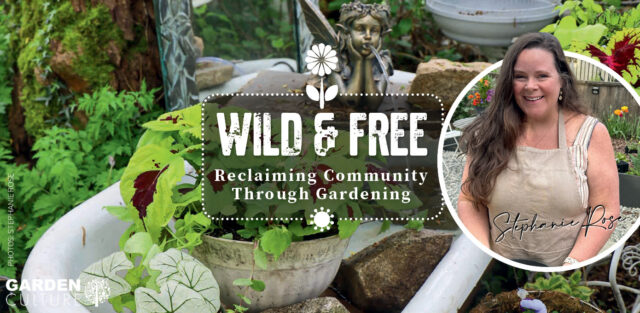
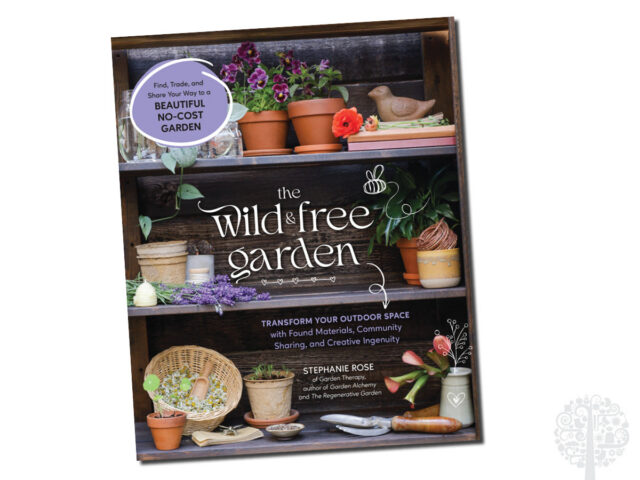
“Bartering is such a lost art,” explains Stephanie Rose of Garden Therapy and the author of the recently released book, The Wild & Free Garden: Transform your Outdoor Space with Found Materials, Community Sharing, and Creative Ingenuity. “I have this and a lot of it, and I’d like to trade it for something else. Just putting that out there gives an opportunity for these connections.”
Bartering can include trading goods or skills. Once a routine practice, the act is no longer central in the modern global economy. However, people are craving human connection, and bartering is making a comeback; not to replace our current economic system, but to add richness to community life.
Beyond Cost: The Wild & Free Garden Philosophy
Rose has written several books, including some of my favorites, Garden Alchemy and The Regenerative Garden. I was initially drawn to her new release because I thought it would appeal to those who see start-up costs as a barrier to gardening. But The Wild & Free Garden is about much more than monetary savings. The garden barter is but the first benefit.
Rose admits that when she first started writing, the theme was zero-cost gardening. It evolved into an inspiring read about escaping one-click buying and same-day shipping, turning instead to hunting and gathering, the sharing economy, and becoming a villager to build meaningful relationships with neighbors. The word ‘free’ isn’t only about cost savings; it’s about liberating yourself from the rat race, slowing the pace, and reclaiming community.
“There’s this loneliness epidemic,” Rose explains. “[In 2020], the pandemic taught us how to socially isolate and stay safe at home. It’s been hard for us to transition back into making real connections. Also, with technology developments, it’s made it easier than ever to have convenience at our fingertips.”
But convenience can come at the expense of what Rose calls “micro-connections”: the small interactions that happen when we leave the house, hunt for something unique, and chat with people along the way. “It is really important for us to have experiences where we’re connecting with others and feeling a little kindness, joy, and humanity,” she says.
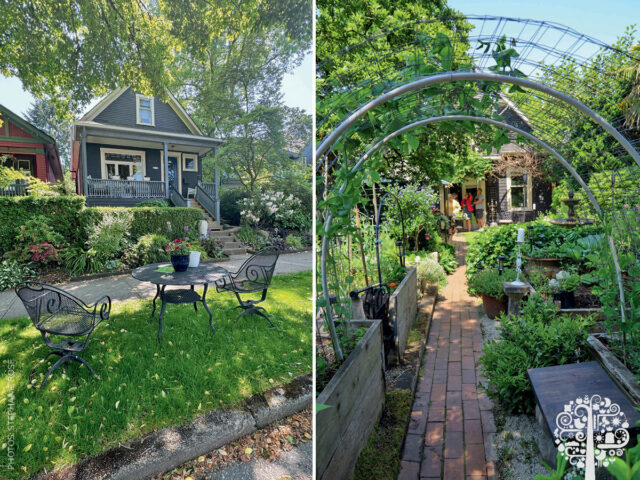
Hunting and Gathering for the Garden
Before ‘hunting and gathering’, Rose recommends spending some time journaling, an essential step to avoiding spontaneous impulse buying. Determine what you’re setting out to do; what kind of garden are you trying to create? Are you building something for your outdoor space? Are you designing something new or improving what you already have? Afterward, make a list of the plants or things that can help you achieve your goal.
Some might fear that sourcing second-hand items for the garden might look tacky or junky, but Rose believes in the old adage that they don’t make things like they used to, and that if you hunt and gather with quality in mind, you can find beautiful pieces with history.
Her book features pictures of a garden fountain made from an old bathtub, a table made with the planks of a former bowling alley, and a gorgeous greenhouse put together with refurbished stained glass windows. It’s all very high-end without the hefty price tag. If you’re in the market for pavers, garden structures, or a new patio set, she suggests searching for something used that might need some sprucing up, promising that you’ll gain much more than just cost savings.
“There’s a set that could be refurbished that might just go to the landfill. So, we’re saving it,” she says. “Secondly, honing our creativity. We can paint our furniture purple and go a little crazy with it, or tile the top of a table. Just the act of refurbishing gives us a sense of pride.”
And pride of place is something we can’t buy online.
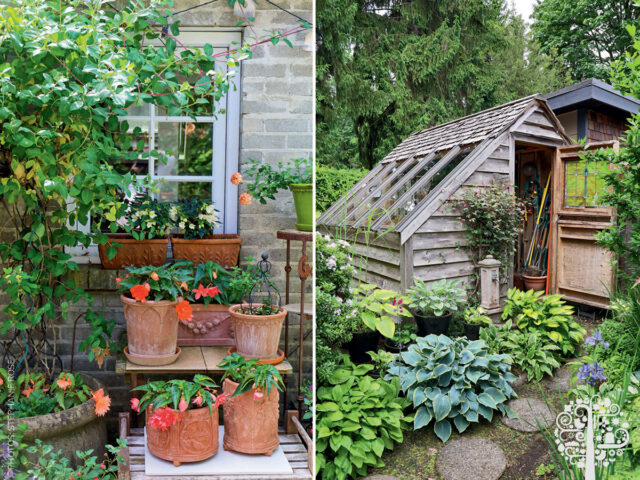
The Sharing Economy – Beyond the Simple Garden Barter
After moving into a new home and seeing how many boxes of things she had, Rose embarked on a ‘buy nothing’ year. In addition to only purchasing essential items in 2025, she wanted to get rid of some of the ‘stuff’ she had collected and rarely used. That’s when she tapped into the sharing economy: online marketplaces like Freecycle, Nextdoor, or other community-sharing apps, where you can find items people are lending or giving away for free.
“We can share. We don’t have to hold on to four pairs of bypass pruners,” Rose says. “I give away three good pairs, keep one, and when I need another because mine are worn out, I go to the sharing economy and see if anyone else has some lying around. If we start to trust in building this kind of community, we have access to the largest marketplace in the world, which is all the stuff that we’ve been holding onto.”
Many cities are launching sharing apps and offering incentives to those who want to be involved. Mine recently offered a free subscription to the first 100 people who signed up. I’m now part of a large sharing community where I can borrow items instead of buying them. I can also lend items based on demand.
“These small interactions are bringing us closer together. We’re sharing with people who have needs and practicing generosity,” Rose explains. “It’s an actual psychological phenomenon that when you do something nice for someone, you get these hits of hormones that make you feel amazing. So, you know, it can be purely selfish, but then also, you get to start practicing being part of your community, so that when you’re walking around the neighborhood, you see your neighbors and you stop for a chat and start bridging the stranger gap.”
Becoming a Villager: Projects for Connection
Gardeners are generous by nature. Over the years, I’ve participated in seed swaps, plant divisions, and seedling sharing; the joy of growing something is hard not to pass along. One of my favorite chapters in The Wild & Free Garden is about becoming a villager and offers fun project ideas to help you achieve that goal. Events like tool repair blitzes, soil parties, skill-sharing get-togethers, and produce preserving workshops.
One of my most-loved ideas is the plant potluck, where the host sets a date and time and asks all attendees to bring seedlings (spring), cuttings (summer), or divided perennials (fall). Acquiring something new for the garden at no cost while connecting and sharing knowledge with other gardeners? That’s my kind of party.

From Inspiration to Lifestyle Change
During our chat, Rose tells me about her book launch for The Wild & Free Garden and how one reader told her she came looking for garden design ideas but left with a full lifestyle reflection. I agree, and it doesn’t require a complete lifestyle overhaul. Start small by choosing to look for second-hand items before buying new, joining an online sharing community, or offering to mow a neighbor’s lawn or the hell strip—the patch between the sidewalk and road—while you’re doing your own.
Rose’s earlier books focus on the healing benefits of gardening, but this one expands that idea to include human connection, creativity, and community. The Wild and Free mindset revives old-fashioned ideas —and the more people participate, the more everyone benefits.
“It’s unusual in our current-day society, but this is how it used to be,” Rose says. “We didn’t sit in our homes looking at screens. We went out of our homes, and that was our portal to the world: our front doors, our front porches, and our front yards.”
Hope to see you out there!
Find Stephanie Rose’s The Wild & Free Garden online and at most major bookstores!
Check out her website gardentherapy.ca for fascinating content on gardening, sustainability, and more!