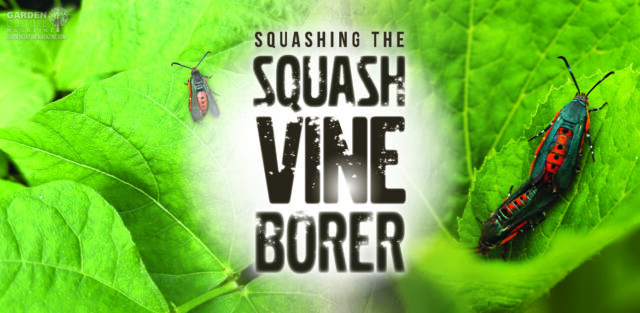
What’s a girl gotta do for a bit of zen out in the garden? I was enjoying some ‘me-time’ in the veggie patch the other day and pruning my tomatoes when I stumbled upon a colorful beetle-or-moth-type-thing sitting on the vines of my pole beans. What was this critter, and what did it want from me? I hoped it was something good, but my gut instinct told me otherwise. This bug was here to ruin everything. My life, even.
A little dramatic, I know, but I can’t help but be upset by the presence of pests in my edible garden. With a shorter growing season, bugs can quickly damage my crops, resulting in a slim harvest. I took a quick pic, grabbed my copy of The Vegetable Garden Pest Handbook by Susan Mulvihill, and quickly identified the culprit: the Squash Vine Borer.
An adult squash vine borer is a red and black moth that is active during the day. It has metallic green forewings, transparent hindwings, and is about the same size as a wasp. I hadn’t spotted any larvae yet, but Mulvihill describes them as fat, cream-colored caterpillars with brown heads that hatch from brown eggs.
Squash Vine Borers typically go after the curcurbit family and are most often spotted on pumpkins and summer and winter squash. I have zucchini plants beside my pole beans, and pumpkins in containers nearby, so it makes sense that I spotted it there. According to my pest handbook, the larvae feed inside the stems, block the flow of water and nutrients throughout the vines, resulting in wilting and plant death. Just lovely.
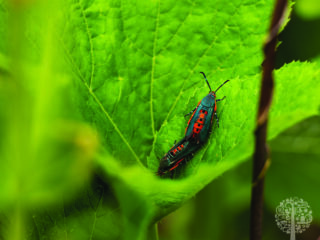
Seeing the actual bug, like I did, is a pretty good sign that you have squash vine borers and need to be on the lookout for potential problems. Other signs of activity include:
The squash vine borer pupae overwinter in brown cocoons in the soil where the previous year’s host crop grew. This is one of the reasons why crop rotation is essential; if I keep putting squash in the same spot, pests will have an easier time finding their snacks. When the female moth leaves her cocoon, she mates and lays eggs at the base of a host plant or on the soil surface. Mulvihill says the eggs hatch in about a week, and the caterpillars bore into the plant stems where they’ll feed for a month. Once they’ve had enough, they pupate in the soil, producing one or two generations per year.

I’ve checked my plants for eggs and larvae at the base of the stems, but so far, no sign of anything terrible. Good old-fashioned garden observation is crucial to Integrated Pest Management (IPM) strategies, so I’ll be sure to constantly check my garden for all kinds of bugs. If I see any eggs, I’ll crush them. If the larvae are already present, I’ll cut into the stem and remove them.
The squash vine borer has some natural predators, including ground beetles and parasitic wasps. These are the good kind of bugs you want in the garden, so protect them at all costs!
Here are some other ways to control squash vine borers from infesting your edible crops:
After closing up the gardens at the end of a growing season, Mulvihill recommends cultivating the top two inches of soil to expose any pupae to frigid winter conditions and predators.

How do professional growers keep their rooms free of pests and diseases? In our Professional POV series, Alexandre Gauthier of Origine Nature talks IPM.

Banker plants are fantastic for the organic gardener looking for eco-friendly pest management. Claude Robert explains how they work.

Strive for a self-sustaining ecosystem in the garden with cultural practices like crop rotation and interplanting. Haley Nagaski reveals her IPM toolkit.