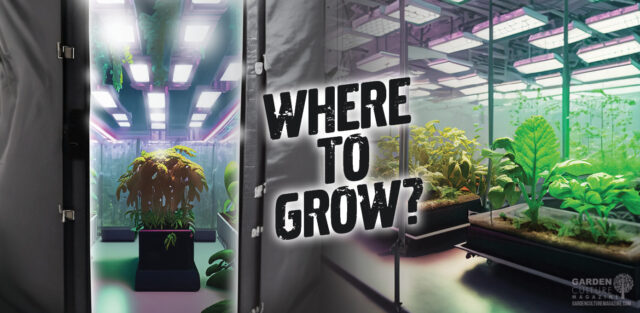
We don’t all have the luxury of being able to choose the perfect location for our hobby, but we should all be aware of the pros and cons and how to get the most from our endeavors! Here’s what you should consider when evaluating a potential indoor growing space.
1. Location, Location, Location:
Basements are best. They benefit from the natural insulation of the earth, which will help keep temperatures in your grow room as consistent as possible and easy to control. The worst choice is usually the attic—these spaces suffer from temperature extremes. Garages are often considered but typically offer lousy insulation and poor protection from pests. Insulation can help any grow location, as can timing your grow sensitively to the season. If using a spare room, the best choice is one with the fewest sun-facing windows.
2. Indoor Growing – Space Considerations:
Space is everything—especially the vertical height available. Many beginners underestimate how tall their plants can grow throughout the lifecycle and the space required between grow lights and the canopy. Whether it’s a spare room, closet, basement, or a grow tent, ensure it can accommodate your plants, grow lights, fans, carbon filters, humidifiers/dehumidifiers, grow trays, reservoirs, etc. Remember, it’s not just about filling a space with foliage! You must allow easy access for watering, pruning, and other maintenance tasks.
3. Electrical Safety:
Prioritise electrical safety. Your grow lights, fans, and other equipment will require substantial electricity, so ensure your electrical system can handle the load. Don’t get too inventive with extension leads and multi-sockets. Use surge protectors and avoid overloading circuits to prevent fires or other hazards. Keep electrical equipment away from water sources and drainage areas to prevent potential electrocution risks. Ensure all electrical connections are secure and ballasts are supported and out of the way—preferably mounted on fire-proof materials.
4. Indoor Growing – Temperature and Humidity Control:
Humidity can be a moving target during your grow. At first, your young plants won’t transpire much and benefit from elevated humidity. If you live in an arid climate, invest in a humidifier. However, once your plants grow and develop, you’ll likely have the opposite problem—too much humidity! That’s when you must plug in a dehumidifier or step up the ventilation/air exchange. This is particularly important as plants enter generative production (flowering and fruiting). Therefore, your chosen space should allow for temperature and humidity regulation. Depending on the space, this might involve adding insulation, heating, or cooling systems or selecting a location that naturally maintains the ideal conditions.
5. Ventilation:
Even so-called “sealed rooms” need ventilation at the beginning of the dark cycle. Most growers, on the other hand, use ventilation to provide constant air exchange in their grow space to regular temperature, humidity and carbon dioxide levels. If your grow space is over six cubic metres (or 200 cubic feet), you should consider two fans—a slightly smaller one for bringing fresh air into your grow space and a size-up fan for extraction. Extraction points should be high up in the grow space to remove the warmest air. (Some LED growers duct this warm air back into their grow tents during the winter to help warm their plants!) As long as the fans are speed-controllable, bigger is always better, albeit more costly. A 10″ EC extraction fan running on low generates much less noise than a 6″ fan running at full pelt—and gives you some extra wiggle room if and when you need it.
6. Lightproofing:
Many plants require a specific dark period for healthy growth. Your growing space should be able to be made completely dark when needed. Consider adding lightproof curtains or other materials to block out external light. The easiest option, of course, is to buy a quality grow tent that’s purpose-made for this job!
7. Choosing Grow Lights and Output:
Most growers opt for LED grow lights because of their improved full-spectrum and high efficiency. Propagation grow lights typically use under 100 watts. Much more power is required to illuminate light-loving flowering plants throughout their lifecycle. As a general guide for most modern, full-spectrum LEDs with competitive efficacies, figure a minimum of 500 watts per square metre or 50 watts per square foot.
8. Indoor Growing – Light Placement:
Your grow light should be close enough to provide sufficient light without burning the plants. As your plants grow, you may need to adjust the height of your lights. Don’t grow Christmas trees. Top your plants to encourage a wide, bushy form where multiple flower sites bask roughly the same distance from your light instead of allowing one apical dominant flower site to force your grow light further from the satellite flower sites.
9. Water Source and Drainage:
A water source nearby is crucial for easy watering and dealing with run-off. Ensure your space has easy access to water and, importantly, a suitable drainage point to prevent water buildup and potential mould issues.

A Grower’s Guide to Testing and Amending Indoor Soil
Should you test your indoor soil? Hell, yes! Dustan McLean says testing organic soil is a crucial step that indoor growers shouldn’t skip.

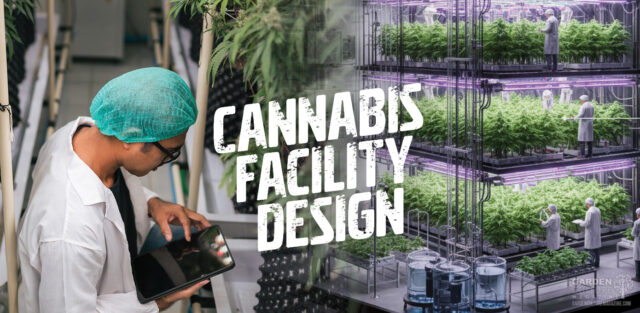
Planning Your Next Grow: Cannabis Facility Design
Learn about cannabis facility design from the ground up. Industry expert Adam Clarke shares insights on planning, budgeting, building partnerships, and why every grow is unique.
5 Cool Ways to Master Crop Steering
Crop steering isn’t complicated! These 5 tools help you manage VPD, lighting, irrigation, pH, and plant training for stronger, more resilient crops.