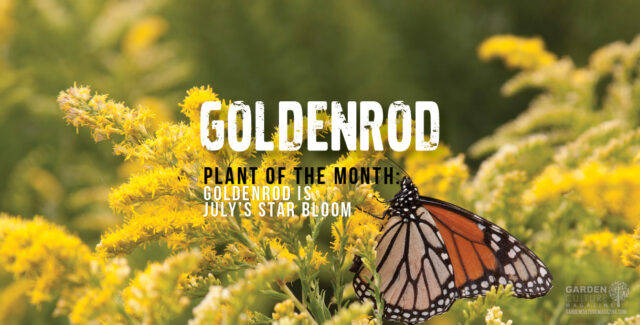
The Goldenrod plant is a no-fuss plant that works overtime for the local ecosystem.
The wildflower garden is in full bloom, and goldenrod is the star attraction. A native wildflower of North America, it grows everywhere, from the prairies to coastal landscapes. Hardy to -40°C, this plant stands out because of everything it does for the ecosystem.
According to Pennsylvania State University, 11 species of native bees are specialists in goldenrod and seek it specifically for their diet. It’s a host plant for several butterfly and moth larvae. The high-quality pollen it produces is rich in protein, fats, and minerals and is critical for the endangered migratory monarch butterfly. For doing all that and still adding color and texture to the summer garden, this plant earns my respect as July’s Plant of the Month.

Goldenrod loves full sun, and if it refuses to bloom, it’s likely because it didn’t get enough time sunbathing. Goldenrod is drought-tolerant and thrives in rocky, sandy, or clay soil. Once established, the plant only needs occasional watering. Too much water can cause root rot and fungal disease. For a bushier plant, prune the stem tips in spring, and remember to deadhead spent flower heads to encourage more blossoms throughout the season.
Although goldenrod is a beacon for beneficial garden insects, it is also a haven for aphids and spider mites. A good rinse of water with the garden hose will eradicate the problem. Sadly, goldenrod has also developed a reputation for being invasive. If left undisturbed and allowed to colonize, the rhizomatous roots will continue to spread and create new plants. Combined with self-seeding flower heads, goldenrod is practically immortal in the garden.
To counter goldenrod’s desire to spread its wings, try growing it in large containers or remove the flower heads before they go to seed. Alternatively, dividing clumps every two or three years will keep the plant under control. To do this, dig it up and separate it, ensuring each section has a good portion of roots and a couple of growth tips. Replant the clumps throughout the garden.
Besides dividing, you can propagate goldenrod by saving the seedheads and drying them in the fall to spread in the garden after all danger of frost is gone in the spring. Don’t cover the seeds, though, as they require a lot of light to germinate. You can also start goldenrod from cuttings. In the early summer, cut shoots from the base and plant them in a small container of regular potting mix. When you see new growth sprouting, transplant it into the garden.
There are over 100 varieties of goldenrod, including these popular selections:

The world of gardening is full of positive movements, and the dandelion challenge is one of them! Let those yellow ‘weeds’ grow to help pollinating insects.

It’s no secret they need our help; creating a welcome space for the bees in the garden is essential to their survival. We can help you get started!

Have you seen a monarch butterfly lately? Catherine Sherriffs writes about how finding this endangered species was a victory for her and the kids.