What is a Waffle Garden?
Keeping the garden watered during the hot summer months can be an endless job. This ancient gardening technique makes it easier! It’s called ‘waffle gardening’ and began in the American Southwest, where Indigenous communities used the method to successfully grow crops in the semi-arid environment for millennia.
The Waffle Garden Comeback
Waffle gardening is making a comeback nowadays. As climate change creates hotter and drier summers, water conservation has become top of mind. Waffle gardening conserves water and gives the gardener a break from daily watering during the peak of summer heat, when moisture retention is more challenging due to evaporation.
How a Waffle Garden Works
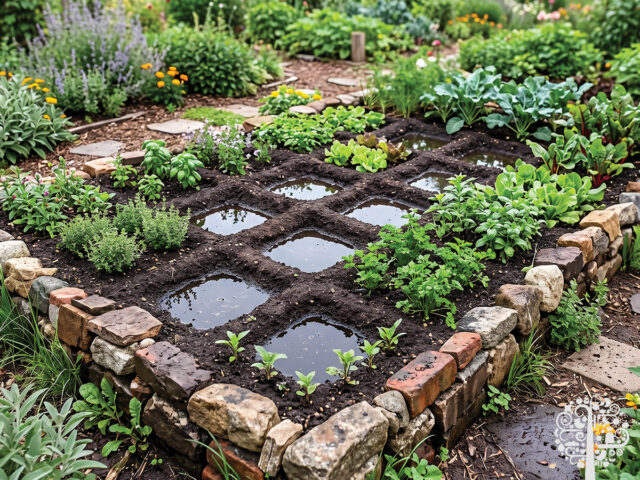
Waffle gardening allows the water to pool and slowly seep into the ground over time. Little pits are dug into the landscape, surrounded by shallow mounds of clay, bricks, or earth. Each pit acts like a bowl, and the finished product looks like a waffle. The water fills the depressions of the waffle where the syrup would pool.
How Often To Water a Waffle Garden
How often you water a waffle garden depends on your region’s weather patterns and the soil. However, during a dry summer, you should only need to water a waffle garden once or twice per week. Be sure to soak the soil to an inch deep each time to ensure it stays moist until the next watering.
One of the best things about a waffle garden is that no matter where you live, anyone can build one.
How To Build a Waffle Garden
- Pick a flat spot with lots of sun
- Prepare the soil by adding compost and leaf mulch. This will help with both water retention and soil health
- Using soil, bricks, or stones, create a border around the entire garden bed.
- Within the enclosure, mark out your “waffle” or grid. For optimal results, each depression should be approximately 1-2 feet wide and long
- Dig each square out to create the depression for the water to pool (approximately 6 to 8 inches deep)
- Use the soil you dug out to form berms about 3 to 4 inches high around each square.
Hot Tip: When watering, focus the spray on the inside of the squares to avoid flattening the berms. If the berms start to disintegrate over time, rebuild them with more dirt.
That’s it! In just six easy steps, you have created a waffle garden!
The Best Vegetables To Grow in a Waffle Garden
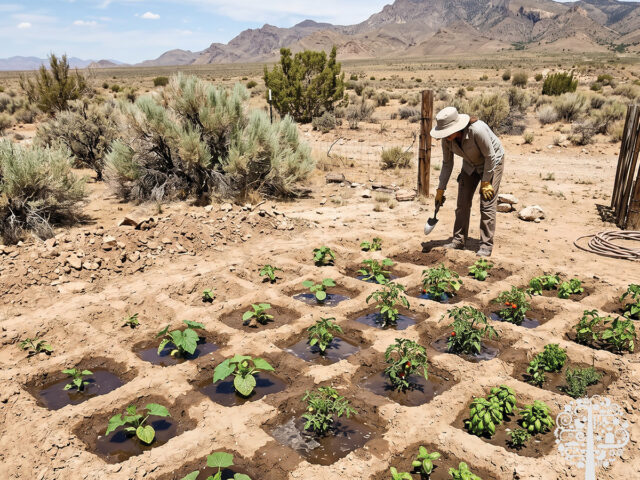
In dry areas, waffle gardens offer more opportunities for the gardener to plant water-loving crops:
- Squash
- Kale
- Corn
- Potatoes
- Beans
- Culinary herbs
Benefits of Waffle Gardening
Soil health: Organic matter and nutrients stay concentrated within the square, helping roots thrive.
Microclimates: The structure protects tender plants from wind and creates warmer soil in cooler months. This can elongate summer plantings into fall and get you started on spring planting earlier in the season.
Adaptability: Waffle gardens can be scaled up or down, making them perfect for both backyard gardens and large community plots.