Many gardeners love to feature fiddlehead ferns in their yards, and many foodies love having them before they unfurl on their dinner plates! As far as this writer is concerned, you should be enjoying both. While grocery shopping last spring, I stumbled upon the prettiest package of fiddleheads I’d ever seen. I was immediately drawn to ForageGirl’s products and looked them up when I got home for this feature.

ForageGirl is a second-generation family-run farm founded by Nicolas Secord under Norcliff Farms in 1973. He started fiddlehead foraging when a friend who owned a local store promised Nick he’d take him fly fishing in exchange for some freshly harvested fiddleheads. It wasn’t long before other grocery chains came calling! Typically found growing in shaded woodlands across North America, in the 1970s, people didn’t yet appreciate the green’s sweet taste and brag-worthy nutritional profile. Nick remembers when 49 out of 50 cases he delivered to a store would go unsold. Today, they’re all the rage, and ForageGirl is North America’s largest producer of fiddleheads.

Fiddleheads are considered a superfood, containing just 34 calories per 100 grams, and are incredibly high in vitamins, minerals, and antioxidants. The powerful, plant-based alternative to fish is an excellent Omega 3 and 6 source and has the most complete fatty acid profile among edible greens. With their unique flavor and the fact that they can only be harvested for a few weeks in May each year, fiddleheads have become a springtime delicacy!
Once the fiddlehead unfurls into a beautiful ostrich fern, they are no longer edible!
ForageGirl’s fiddleheads are all wild and hand-picked across Eastern Canada. The farm never uses pesticides, herbicides, or preservatives, and all employees are trained to forage responsibly. Since they don’t use machinery for harvesting, they reduce their carbon footprint and continue that trend with biodegradable packaging. ForageGirl uses natural methods to prepare the fiddleheads for supermarket shelves within 30 hours of harvest, including temperature control and multiple spring water baths.

Over the years, the farm has become an expert on all things fiddlehead, from harvest and cleaning to cooking and eating. Nick met Nina in 2003, and they became life and business partners. Nina started an annual culinary competition, “So you think you can cook?” which invites chefs worldwide to submit their fiddlehead recipes. A few are invited to a cook-off in front of celebrity judges, and all proceeds from the event go to local groups and foundations. Some favorite recipes featured on ForageGirl’s website include sauteed fiddleheads with garlic and lemon butter, Gruyere fiddlehead tart, and fiddlehead fern pasta.
From the earth to your plate, check your local grocery store this spring for ForageGirl’s fiddleheads!

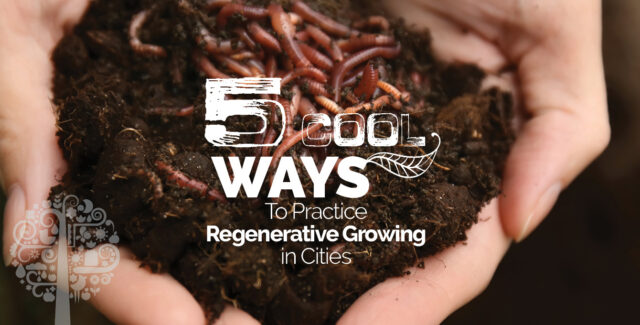
If regenerative growing appeals to you, but you live in a city, fear not! Catherine Sherriffs says earth-friendly gardening practices have no boundaries.
Garden inputs don’t have to be expensive or complicated. Av Singh writes about plant fermentation and making organic botanical brews to boost garden fertility.

When it comes to organic inputs for the garden, often the smellier, the better. Just ask Regi Oneton: he says if it doesn’t stink, you need to rethink.

Jill Demers believes that regenerative agriculture can heal the land and people. A personal experience helped her realize that food really can be our medicine.

From the forest to your plate, fiddlehead ferns are emerging as a modern-day superfood. Forage Girl is North America’s largest producer. Here is their story.

Peter Rabbit isn’t welcome in the garden, but his poo sure is. Haley Nagasaki writes about the benefits bunny droppings have on our plants.

Earth Day 2025 focuses on the need to create clean, cheap, unlimited energy for the world. We already have what it takes; we just need to harness the power.

Meet Reggie Weedman, a cannabis breeder committed to preserving genetic diversity with regenerative farming. See why Canna Country #26 became an award-winning cultivar and why full-spectrum effects matter.

Should you test your indoor soil? Hell, yes! Dustan McLean says testing organic soil is a crucial step that indoor growers shouldn’t skip.