Humidity for Houseplants – Keep Your Plants Thriving
I love incorporating living decor into my house, so I’ve got more than a few houseplants to care for, including Monstera (Swiss Cheese Plant), the ZZ plant, peace lilies, aloe vera, and snake plants. No matter what your preference, many houseplants hail from tropical climates, which means they love humidity! Maintaining good humidity levels is just as important as finding the right lighting. Luckily, our plants give us signs when they need better conditions, and there are some easy, cheap ways to make the magic happen for them, particularly when it comes to humidity.
Signs Houseplants Lack Humidity
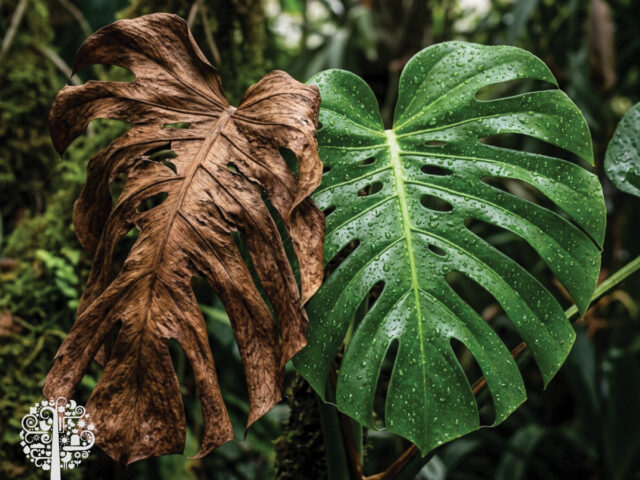
Plants always find a way to communicate their needs to us, and when they need more humidity, they’ll let you know with a few telltale signs. Your houseplants might need more humidity if their leaves display one or more of the following symptoms:
- Yellowing
- Shriveling or curling
- Browning or crisping
- Scorching
- Wilting
Don’t forget that some of the above signs can also be associated with overwatering, so ensure the soil isn’t too wet before narrowing the problem down to low humidity.
Cheap Hacks for Boosting Humidity for Houseplants
If you’ve determined your houseplants need a little more humidity, there are several things you can do to make them feel like they’re back in the tropics. Although it can help temporarily, misting the plant’s leaves is not necessarily the answer and can lead to bigger problems, such as fungus gnats, bacterial diseases, and leaf rot. The following hacks are safe and easy ways to offer plants the right amount of humidity:
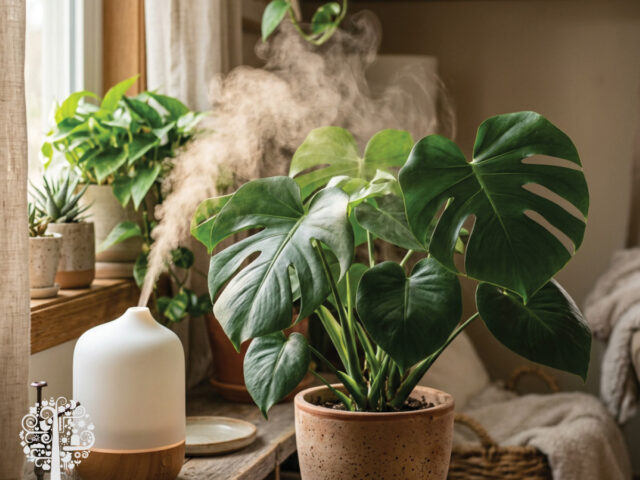
Use a Room Humidifier
Using a room humidifier is a simple way to boost humidity for houseplants. They come in compact sizes, are quiet, and can be easily bought online. In addition to improving plant health, they are also beneficial for human health. Nobody likes a dry house; the flow of steam through the air will help prevent dry skin! The same goes for your houseplants; their leaves will love absorbing the indirect moisture source. I have a small room humidifier that doubles as an air diffuser. It’s easily transportable, and I can set it up next to any of my houseplants when they need an extra boost.
Grouping Plants Together
I love the statement the grouping of several plants makes; it looks fantastic and also helps create a little microclimate and maintain humidity levels. We know that water transpires through leaves, so if you group a bunch of plants together, they can absorb what comes off the others. As transpiration increases, so will the humidity levels in the immediate area.
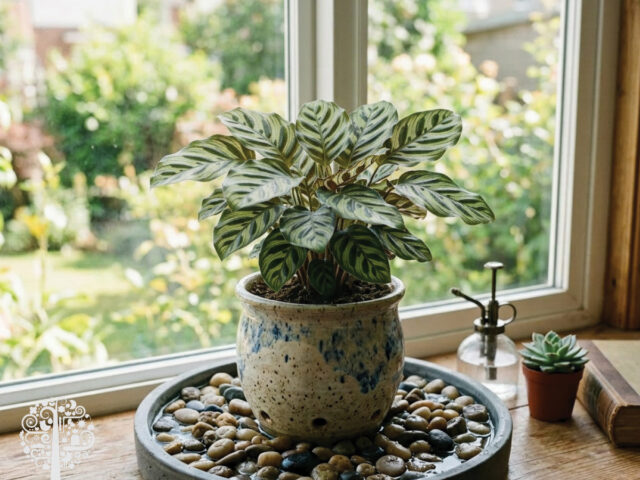
Using a Pebble Tray
A pebble tray is a super easy way to increase humidity for houseplants in need. In her book, Houseplant Party, Lisa Eldred-Steinkopf explains that all you have to do is place a plant pot and its saucer on a larger saucer or tray filled with pebbles and water. Remember to always keep the pebble tray filled with water; as it evaporates around the plant, the humidity will rise. If your plant pot does not have a saucer, make sure it’s not sitting directly in the water in the pebble tray. Instead, prop it up on the rocks so the roots don’t get too wet and the plant reaps all the intended benefits.
Showering with Houseplants
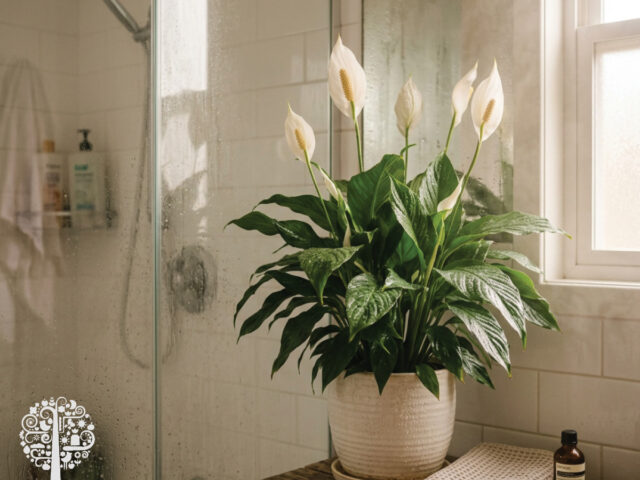
I keep a peace lily and a snake plant in my bathroom, and they both thrive because they don’t need much light and appreciate the extra steam they get from our showers. If you don’t feel like keeping your houseplants in your bathroom, it doesn’t mean things can’t get steamy for them in there. Sabina Palermo, author of Hi Cacti: Growing Houseplants and Happiness, recommends setting houseplants up on a ledge either in or near the shower from time to time. Ferns, prayer plants, and Swiss cheese plants all appreciate this kind of spa treatment. It’s a two birds, one stone situation, with your plant’s humidity needs and your personal hygiene taken care of all at once.
Devices for Monitoring Humidity Levels
Your plants will let you know when they need more humidity, but you can also stay ahead of the game by using garden gadgets to monitor humidity levels in your indoor growing space.
Digital Hygrometers
Digital hygrometers are available at many different price points; a good one will help you take accurate humidity readings in your growing space. Place the hygrometer near the height of the plant’s leaves and away from a sunny window and any vents in the floors or walls.
Thermo-hygrometer
A thermo-hygrometer is a little fancier and works overtime by measuring both the relative humidity and the temperature in a growing space. Since humidity and temperature go hand in hand, this tool is an excellent option for people serious about plant health.
DIY Glass Test
The DIY glass test involves filling a glass with ice water and looking for condensation. Water droplets on the glass’s exterior indicate high humidity, kind of like when you drink a cold glass of water on a hot and muggy day. No sign of condensation means the space is dry. This method is obviously the cheapest one, but it’s also the least accurate. Go with a hygrometer if you really want to know what’s going on in your space, and don’t forget to keep a close eye on the signals your plants are sending you!