
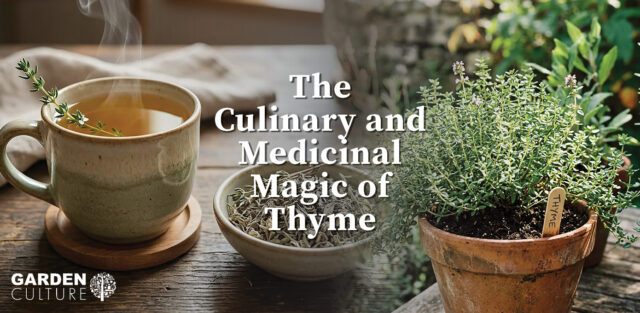
In my medicinal garden, thyme stands out as a multifunctional powerhouse. It’s one of those easy-to-cultivate herbs that has a lot to offer – flavor, healing properties, and versatility. I wouldn’t be without it for both culinary and medicinal use.
Thyme – What’s in a Name?
‘Thyme’ originates from the Greek word thymos, meaning ‘to fumigate or disinfect with the fumes of a particular plant’ – a hint to thyme’s medicinal properties and uses. Historically, the Greeks and Romans burned thyme as incense to purify the air and protect against illness.
It was also a symbol of courage for Roman soldiers who took strongly scented thyme baths before battle. In Europe during the 15th to 17th centuries, it was a medicinal remedy against the plague. Interestingly, in World War I, thyme oil was used as a life-saving antiseptic for many soldiers.
The Many Varieties
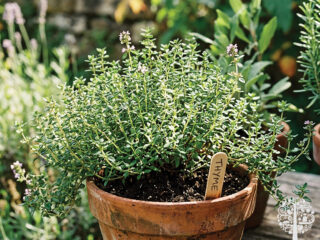
While there are over 300 known varieties, this member of the mint family (Lamiaceae) includes ornamental and wild types with a considerably smaller number of cultivars used in kitchens and gardens. Each has its unique growth habit, distinct flavor, and aroma.
Common thyme, also known as Garden thyme (Thymus vulgaris), is one of the most popular varieties. I also grow Lemon thyme (Thymus citriodorus), which has a citrusy flavor and scent. Pizza or Italian thyme (Thymus nummularius) is another favorite in my kitchen. The latest variety I’m trying is Jekka’s Thyme, because it doesn’t become woody like garden thyme.
Culinary Uses
I use this herb every week – sprinkled over potatoes, zucchini, tomatoes, mushrooms, onions, and eggplant or a tray of roasted vegetables. I add it to homemade salad dressing, casseroles, savory breads and fritters, soups, sauces, stuffing, rissoles and baked dishes.
What makes thyme stand out in terms of taste is that it doesn’t lose its flavor even with long, slow cooking. Dried thyme has even more flavor than fresh. Whenever I have a surplus of thyme in the garden, it gets a good haircut to stimulate new growth. I dry it in a low oven or dehydrator and store it in an airtight jar. I also add it to oil or vinegar to preserve the flavor. Crumbled and used on its own or with other dried herbs like chives, oregano, parsley, and sage, it’s a delicious, rich in digestive enzymes, and healthy salt substitute.

Medicinal Properties
Though small in stature, aromatic thyme is mighty in medicine and has an impressive nutritional profile. It’s packed with phytonutrients, vitamins, and minerals that are known for preventing disease and boosting health. To name just a few, it is high in Vitamin C, which protects the body from free radical damage and helps resist disease. It is also high in Vitamin A, an antioxidant that supports healthy skin and vision. It’s also a good source of Vitamin B6, which helps regulate stress.
Numerous research studies confirm thyme has exceptional therapeutic actions, including its ability to inhibit the growth and spread of malignant cells, as well as antioxidant, anti-inflammatory, antiviral, antibacterial, antifungal, and antiseptic activities.
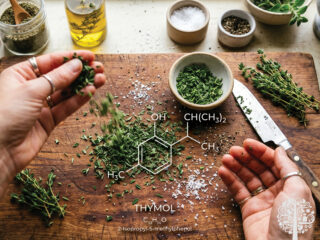
It is rich in essential oils – the active ingredients primarily responsible for the health benefits. Thymol and carvacrol are the two major compounds in thyme oil, and studies confirm that they act as anticancer agents. Thymol displays antimicrobial, antioxidant, anticarcinogenic, anti-inflammatory, and antispasmodic properties. Carvacrol has been found to suppress inflammation. Together, they are powerful.
On top of this, it also contains a large amount of the green pigment, chlorophyll, a natural detoxifier and an anticancer agent.
Healing Remedies using Thyme
As a traditional medicine, thyme was used as a decongestant and for its anti-inflammatory properties. It has been extensively used to treat upper respiratory tract infections, bronchitis, coughs, laryngitis and asthma. In our family, we use it as a tea, an inhalant, and as a spray.
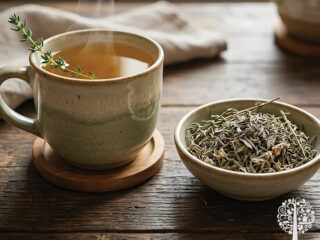
Thyme Tea: Studies show that thymol acts as an expectorant to help relieve coughing and spasms. We drink thyme tea warm or use it as a mouthwash gargle to relieve sore throats and inflamed gums. The healing antiseptic, anesthetic, and pain-relieving compounds have been effective in my experience.
Here’s the recipe I use:
Add 1 teaspoon dried thyme or 2-3 teaspoons fresh crushed or chopped leaves to one cup of boiling water. Cover and steep for 3-5 minutes to infuse. For a strong brew, double this quantity and infuse for as long as possible, stirring often.
Room Fumigant: Thymol acts as a powerful disinfectant agent that is very effective against bacteria and fungi. I add a few drops of thyme essential oil to water and use it as a room spray during illness. Alternatively, I make a high-strength tea (with an intense color) and pour it into a spray bottle when cool to use around the home. A few drops of thyme oil can enhance the strength and help preserve the spray.
Inhalant: For stuffy noses, coughs, and colds, we pour the hot tea into a bowl and use it as an inhalant. I put a towel over my head and breathe in the vapors deeply for about 10 minutes. I also add a few drops of essential oil – thyme, lavender, tea tree, or eucalyptus to enhance the effects and unblock sinuses. I’ve found inhaling the steam and essential oils in the vapor quickly relieves and heals, especially if used at the onset of a cold or flu.
Thyme Oil as Plant Medicine
It is not just good for us – it’s helpful for our gardens too.
Due to the antifungal compounds in thyme oil, it can be used as a natural fungicide against some fungal plant diseases. One study found “Another application of thyme oil rich in carvacrol acting as an antifungal agent has been reported in controlling Botrytis cinerea, a primary pathogen causing stem and fruit rot during pre- and postharvest of ornamental crops, fruits, and vegetables.”1
Another way we can use thyme oil in our gardens is as a biopesticide. Thymol, carvacrol and flavonoids in thyme oil have insecticidal and acaricidal properties that target ticks and mites (Ozcan and Chalchat, 2004). Studies have found it effective against pests like aphids, mealybugs, mosquitoes, armyworms and whiteflies.
DIY Fungicide Spray and Botanical Insecticide
Using ingredients and proportions that align with scientific literature, I make a DIY fungicide and biopesticide spray with thyme oil (and sometimes other essential oils like oregano, tea tree or lemongrass).
I use this simple recipe to target powdery mildew, early blight, and black spot, common fungal diseases in my climate.
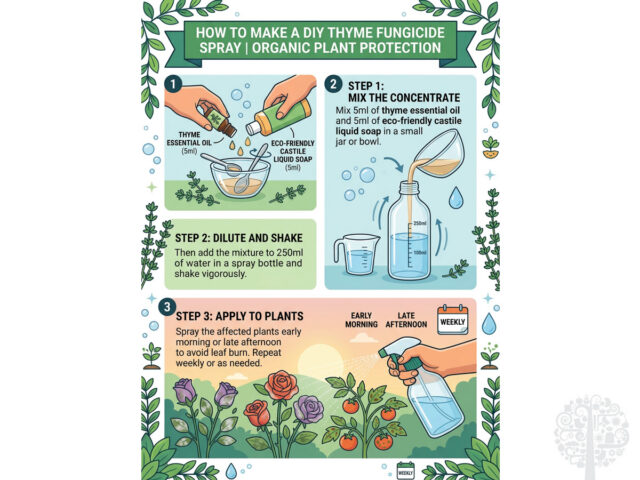
- Mix 5ml of thyme essential oil and 5ml of eco-friendly castile liquid soap in a small jar or bowl.
- Then add the mixture to 250ml of water in a spray bottle and shake vigorously.
- Spray the affected plants early morning or late afternoon to avoid leaf burn. Repeat weekly or as needed.
Cultivating and Caring for this Super Plant
This low-growing, evergreen perennial herb is characterized by its strongly scented leaves and flowers. It thrives in a dry, sunny, temperate to hot climate. It tolerates drought, frost, salty and poor or rocky soil, but it will rot or succumb to fungal disease if the soil is too wet. It does best in a neutral pH soil. If it needs a boost, I water it with liquid seaweed or diluted worm leachate.
I predominantly propagate thyme from cuttings or divide established plants with a good root system, although you can also grow from seed. It gets straggly as it ages. The internal stems can become woody and not as attractive. I reinvigorate my thyme by covering the center of the plant where it’s woody with compost and a light layer of mulch. Push the stems down into the soil so new roots form. This encourages new growth and is a form of propagation called layering.
Thyme isn’t just a kitchen staple – it’s a healing ally for human and plant health. Whether steeped in honey to soothe a sore throat, infused into oils or as a garden remedy, it’s one of the most versatile and trusted herbs to grow for wellness. I hope it earns a place in your garden too.
* Always seek advice from a professional before using a plant medicinally.
References:
- Anti-Inflammatory and Antimicrobial Properties of Thyme Oil and Its Main Constituents Thyme History, Applications, and Overview of Potential Health Benefits by Keith Singletary Phytochemical Profiling and Therapeutic Potential of Thyme (Thymus spp.): A Medicinal Herb
- Zhang, J.; Ma, S.; Du, S.; Chen, S.; Sun, H. Antifungal activity of thymol and carvacrol against postharvest pathogens Botrytis cinerea. J. Food Sci. Technol. 2019, 56, 2611–2620.
- A Focused Insight into Thyme: Biological, Chemical, and Therapeutic Properties of an Indigenous Mediterranean Herb
- How Can I Use Herbs in my Daily Life? by Isabell Shipard




3 Responses
Raccoons aka roving marauders devastate the plants on my deck at least once a week but they never touch my thyme. I’ve learned to keep my thyme pots near my most victimized plants (the Raccoons love to upend NY Wandering Jew I keep in window-boxes). But placing my thyme pots on the railing on each end of the window box, like vigilant soldiers, the marauders steer clear.
That is so interesting! Wish it would work for the many deer that visit our garden!
It is interesting to be informed that thyme is medicinal. Occasionally I use it in cookies. Many thanks for the information about thyme.