
In addition to a bumper tomato harvest this year, my cucumbers did incredibly well. So well that I can’t really remember the last time I bought a cucumber! I grew standard English cucumbers on one side of an arching trellis; on the other, I planted pickling cucumbers that seriously delivered. In fact, I also can’t remember the last time I bought pickles at the store! I’ve been making simple and delicious refrigerator pickles all summer long.
What are Pickling Cucumbers?
Pickling cucumber plants produce an abundance of adorable pickle-like cucumbers about 3”-4” long. They’re ideal for pickling, but you can also eat them fresh for a delicious, sweet flavor.
Pickling cucumber plants appreciate full sun and rich, loamy soil. They need consistent moisture, about an inch of water per week, and appreciate having a trellis to climb, although many plants don’t climb very high, so something small will do! They’re also perfect for a container with something to climb on!
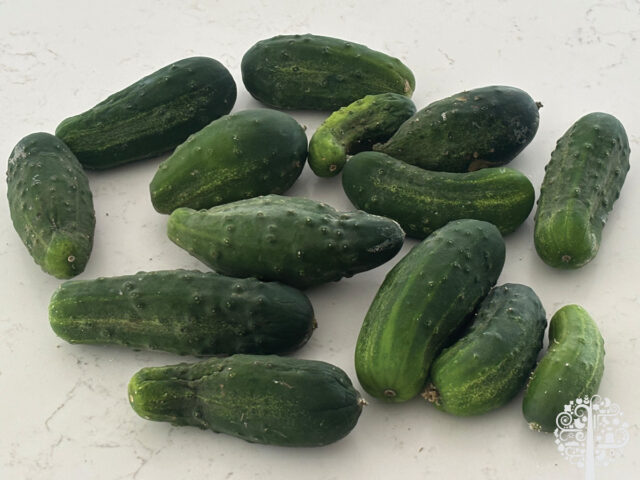
Harvesting Pickling Cucumbers
These cuties take about 50 to 55 days to mature and are ready to harvest when they reach 3 or 4 inches in length; any longer, and you risk compromising their crisp texture. I check my plants daily for new cucumbers. Don’t forget to look under the leaves; I can’t tell you how many surprise cucumbers I found hiding! The more often you harvest, the more your plant will produce.
Why Refrigerator Pickles?
I’ve been choosing to make refrigerator pickles instead of canning because, throughout the growing season, I usually harvest only about five or six pickling cucumbers a week from my kitchen garden. Water bath canning is absolutely an option and is more shelf-stable, but it’s a lot of work for one jar of pickles. If you have multiple plants or a massive harvest at the end of the season, canning is worth it.
Although they won’t keep as long, I promise refrigerator pickles are just as delicious, and they won’t be around for long anyway, because you’ll devour them in no time.
Perfect Pickles
I scoured the internet and various pickling cookbooks looking for the perfect pickle recipe. There are too many to count! Ultimately, you need to know what you want out of a pickle. I personally don’t like anything sweet; my family loves a tangy garlic dill pickle. It also needs to be crisp and crunchy; I can’t handle anything soggy.
The Secret to Crunchy Pickles?
In her book Preserving with a Purpose, Sarah Thrush has a great guide for canning crisp cukes. She recommends the following:
- Use the freshest cucumbers you can find, picking them straight from the vine early in the morning.
- Remove the cucumber’s blossom end, as it contains enzymes that affect texture.
Many online sources also recommend leaving the cucumbers whole instead of slicing them into rounds or spears, and soaking them in an ice-water bath for 30 minutes before adding them to the brine. I followed all of the above recommendations, and the result was definitely crispy cucumbers!
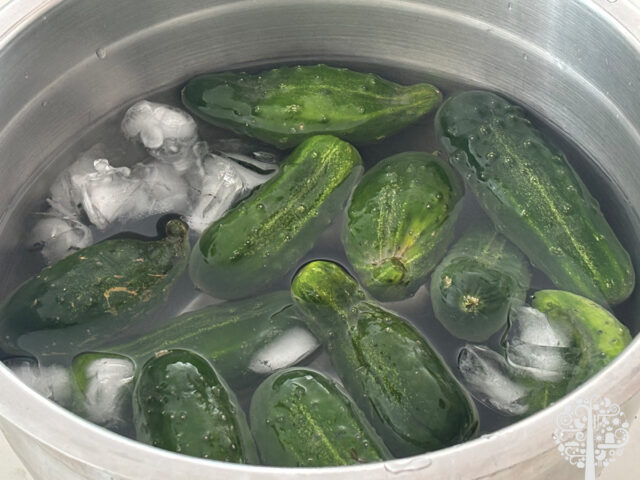
Making Refrigerator Pickles
After washing the cucumbers, I place them in an ice-water bath and begin preparing my jars and the brine. I followed a recipe that’s close to the famous Gibby’s Montreal dill pickles, but feel free to tweak this base to your family’s taste.
Boiling the Brine
For about 14 cucumbers, you will need:
- 3 cups pickling vinegar
- 3 cups water
- 3.5 tbsp kosher salt
- 1.5 tsp sugar
Bring to a boil to dissolve the salt and sugar, then turn off the heat.
Preparing the Aromatics
For two quart-sized Mason jars, you will need:
- 8 large cloves of garlic, smashed
- 8 sprigs of fresh dill
- 1 tbsp of black peppercorns
- 1 tbsp of mustard seeds
- 1 tsp of coriander seeds
- A pinch of red pepper flakes
Divide the ingredients evenly between the two jars, pressing the dill sprigs to the sides.
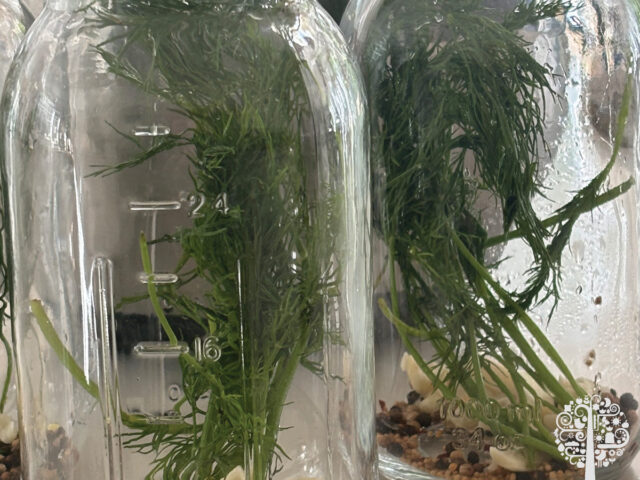
Stuffing the Jars
Carefully pack the trimmed cucumbers into the jars without bruising them. Pour the hot brine over the top, making sure all the cukes are submerged and leaving about a half an inch of headspace at the top.
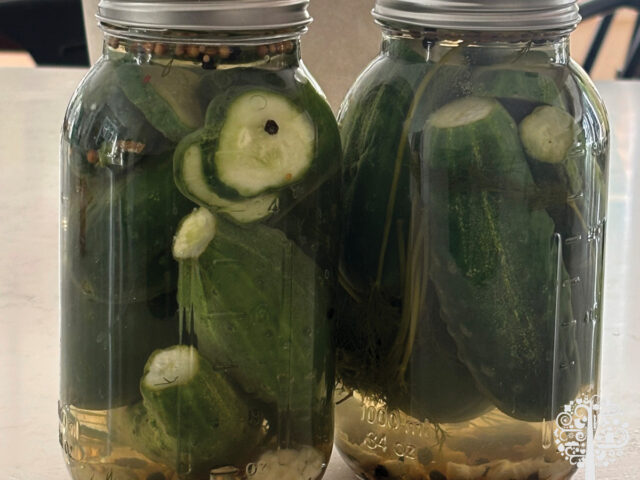
Seal and Cure
Close the jars with tight-fitting lids and let them cool for 24 hours on the counter. The next day, refrigerate them. If you’ve sliced the cucumbers, they’ll be ready in about a week. If you’ve left them whole, let them sit for two to three weeks so they can absorb all the flavors.
The Results
Following this process, you’ll get delicious, perfectly crunchy cucumbers! Although the Gibby’s Montreal secret is well-guarded, this was pretty close, and we’ve been enjoying these pickles on burgers, sourdough sandwiches, and more. It’s best to eat them within six weeks, but you’ll probably eat them well before then!